
Short-Term vs. Long-Term Rental: Which Strategy is Most Effective in 2026?
The real estate market looks entirely different than it did just a few years ago. Between shifting interest rates, fluctuating home equity values, and tighter municipal regulations, property owners face a highly complex landscape. And because of these shifting dynamics, maximizing the value of a property requires a highly customized approach. Some homeowners need immediate cash flow to offset rising property taxes or personal expenses. Other people are looking to strategically diversify an investment portfolio. If you currently own a home or you plan to acquire an investment property soon, identifying the right path for your asset means looking closely at how short-term rentals (STRs) and long-term rentals (LTRs) actually perform on the ground.
The hustle and the high returns of short-term rentals
If your primary goal involves maximizing top-line revenue, hosting short-term guests usually offers the highest ceiling. Properties located near vacation hubs, medical centers, or popular downtown districts frequently outpace traditional rental income by significant margins. Short-term models allow the use of dynamic pricing, which means you can pull in premium rates during holiday weekends, major local festivals, and peak travel seasons.
This path also keeps your schedule flexible. You stay in control of your own property calendar. If you want to use the house for a family gathering or a personal getaway, you can block out those dates in advance. This approach allows you to enjoy your property when you choose, while guest bookings help offset your mortgage throughout the rest of the year.
Navigating risk and reward
Of course, high returns bring a unique rhythm. Short-term income rides the waves of seasonal travel patterns, so you can expect substantial cash injections during the high season, but you must also anticipate much quieter stretches during the off-season. Because of this volatility, we advise our clients to set up a comfortable cash reserve to help manage fixed expenses during the slower months.
The peace and predictability of long-term rentals
On the other hand, many owners value a quiet, predictable approach to wealth building. Long-term rentals offer an exceptional level of stability. A standard twelve-month lease means a dependable check lands in your account on the first of every month. This reliable rhythm takes the guesswork out of your expenses and simplifies your long-term financial planning.
Long-term properties also keep your daily operations straightforward. You bypass the constant stream of guest messages, endless turn-over cleanings, and the need to refresh your online listings continuously. It serves as a steady, reliable engine for your portfolio.
The legal gatekeepers: HOAs and city rules
Before you start picking out furniture or running spreadsheets, check your local laws and Homeowners Association rules. Local regulations play a massive role in your final choice. Some cities enforce strict caps on short-term rental licenses or ban them altogether. Other towns actively support local tourism, which makes the hosting journey much smoother. Sorting out these legal details early will save you significant headaches later.
See: Short-Term Rental Permitting in Hampton Roads, VA
Which path fits your life and goals?
The final decision usually comes down to your primary financial objectives and lifestyle constraints:
Choose short-term rentals if you want to push for peak income, prefer the flexibility of dynamic pricing, and want to vacation in the home yourself.
Choose long-term rentals if you want steady monthly checks, prefer an uncomplicated daily routine, and value total predictability.
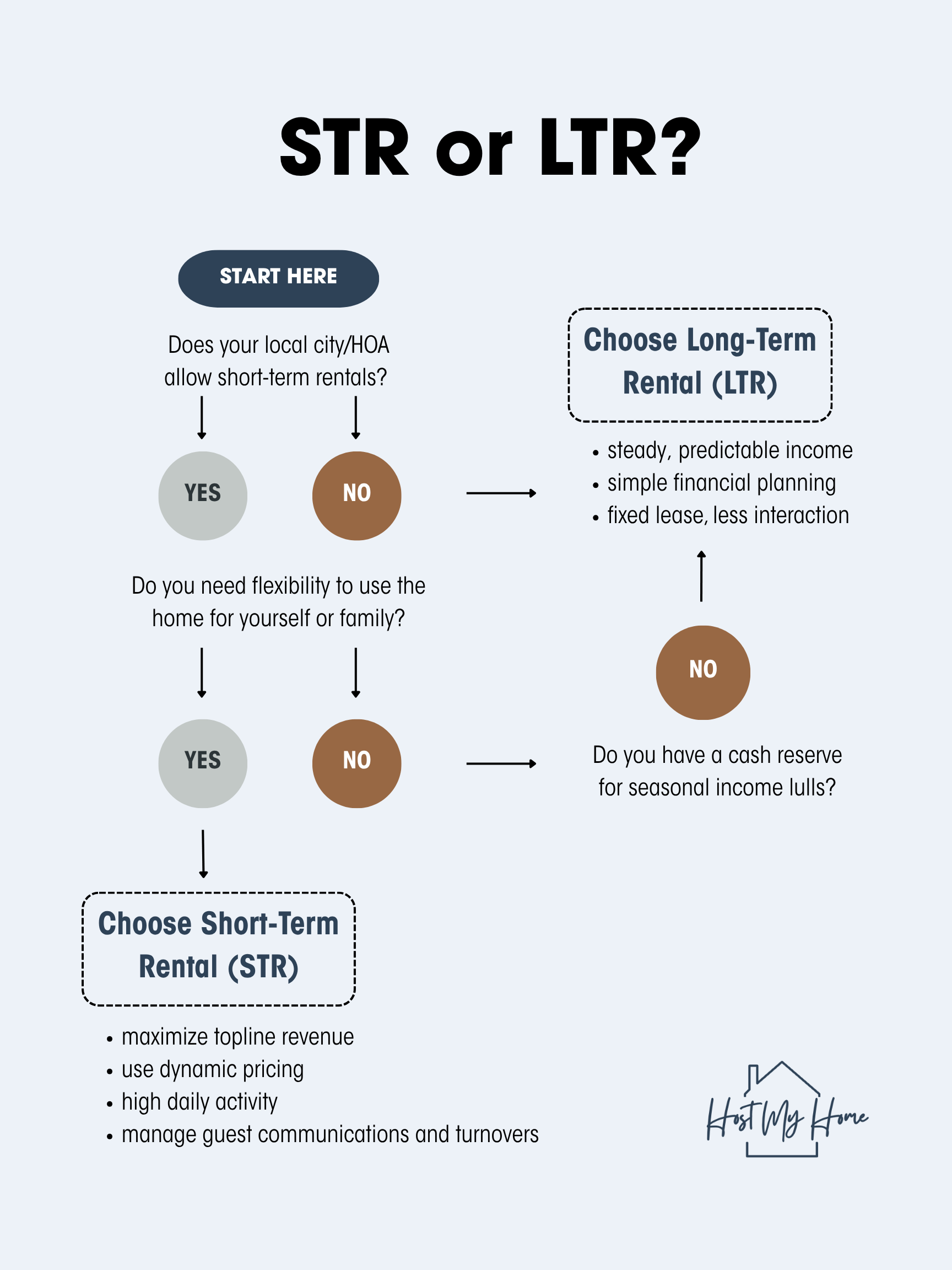
If you’re still not sure, Host My Home LLC can help you evaluate the pros and cons of each scenario in more detail. We’ll review local market data and your lifestyle preferences to identify the ‘best fit’. We can also run a revenue analysis, which factors in location, seasonality, and dynamic pricing, so you can see your property’s earning potential.